
Short answer: no, a bigger door is not the same as a commercial door
If you two are arguing about whether your detached workshop, boat barn, or home business bay has a "commercial" door just because it's large or sees heavy use, the answer is: size alone doesn't make it commercial. What makes a door commercial-grade is the gauge of steel, the spring and track system, the duty cycle of the opener, and how many times a day it's designed to open and close without wearing out. A residential garage door stretched to a bigger size is still a residential door. A true commercial or warehouse door is built differently from the ground up.
What actually separates commercial from residential doors
Here's what to look at if you want to settle this for good:
- Steel gauge and panel construction: Commercial doors typically use heavier gauge steel and reinforced panels because they're built to take more daily abuse, more impacts, and more wind exposure over a larger surface area.
- Track and roller sizing: Commercial doors often run on wider, heavier-duty tracks with larger rollers rated for higher cycle counts. Residential tracks are sized for a few cycles a day, not dozens.
- Spring systems: Residential torsion springs are usually rated for around 10,000 cycles. Commercial-grade springs are rated much higher, sometimes 25,000 to 50,000+ cycles, because a loading dock or workshop door might open and close many times in a single day.
- Opener duty cycle: A residential opener is built for intermittent use, a few trips a day. Commercial operators are built for continuous or frequent-duty cycles and often use higher horsepower motors with chain or jackshaft drives instead of a simple belt or screw drive.
- Wind load engineering: Both residential and commercial doors in this part of Florida need to meet wind-load requirements, but larger commercial doors have more surface area catching wind, so the bracing, track anchoring, and panel reinforcement have to be engineered accordingly.
So if your workshop door is just an oversized residential door on a heavy-duty-sounding opener, it's still going to wear out like a residential door under commercial-style use. That mismatch is usually where the real problems start.
Why the maintenance needs are genuinely different
This is the part that actually matters for your argument. A door that cycles a handful of times a day needs a seasonal check. A door that cycles dozens of times a day, especially one exposed to salt air near the coast, needs attention far more often. Here's why:
- More cycles means faster wear on cables, rollers, and hinges. Components that would last years on a home garage door can show fraying or wear much sooner on a high-use door.
- Salt air accelerates corrosion on hardware like springs, cable ends, and fasteners, and that process speeds up when parts are already stressed from frequent use. A door near the water that opens 20 times a day will show rust and pitting on hinges and tracks faster than one that opens twice a day.
- Humidity and moisture cause swelling in wood-paneled or composite doors, and on a heavy-use door that swelling can throw off alignment faster, leading to binding or off-track issues.
- Afternoon downpours and storm season add stress. Water intrusion around weatherstripping and bottom seals is worse on doors that are opened frequently during wet weather, since more opportunities exist for water to get pulled in.
In practice, that means a high-cycle door should get lubrication, hardware inspection, and alignment checks on a tighter schedule than the once- or twice-a-year tune-up that's fine for a typical home garage door.
A quick way to check what you actually have
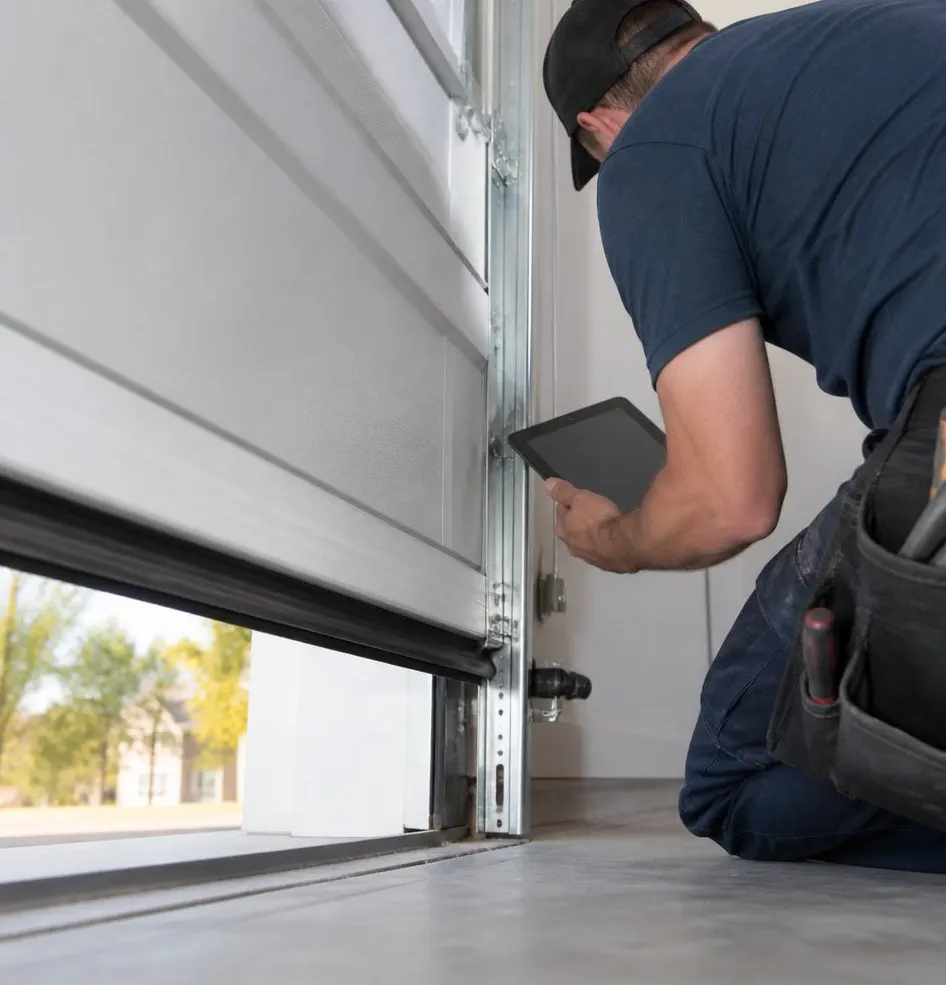
Look at three things: the thickness of the door panel and how it flexes when pushed, the width and gauge of the track, and the opener's duty rating (check the nameplate or manual, it will say if it's rated for intermittent or continuous use). If all three point to light-duty residential specs but the door is cycling many times a day, that's a mismatch worth fixing before a spring or cable fails unexpectedly.
When to call Big Pine Key Garage Door Pro
If you're not sure whether your door and opener are actually rated for the way you're using them, or if you're noticing faster-than-expected wear, fraying cables, or rust on hardware, it's worth having it looked at before something fails mid-cycle. We offer Garage Door Maintenance & Tune-Up service that includes checking spring cycle wear, lubricating tracks and hinges, and inspecting for salt-air corrosion, scaled to how often your door is actually used. For doors already showing wear, our Garage Door Cable & Roller Repair service addresses the fraying, slipping, or binding that heavy-use doors tend to develop first.
If your garage, workshop, or commercial bay door in Big Pine Key, Key West, Marathon, or anywhere else in the Lower Keys is due for a real assessment, give Big Pine Key Garage Door Pro a call. We'll tell you straight whether what you have is holding up to the job you're asking it to do.